
How much does a consumer unit upgrade cost in Kent?
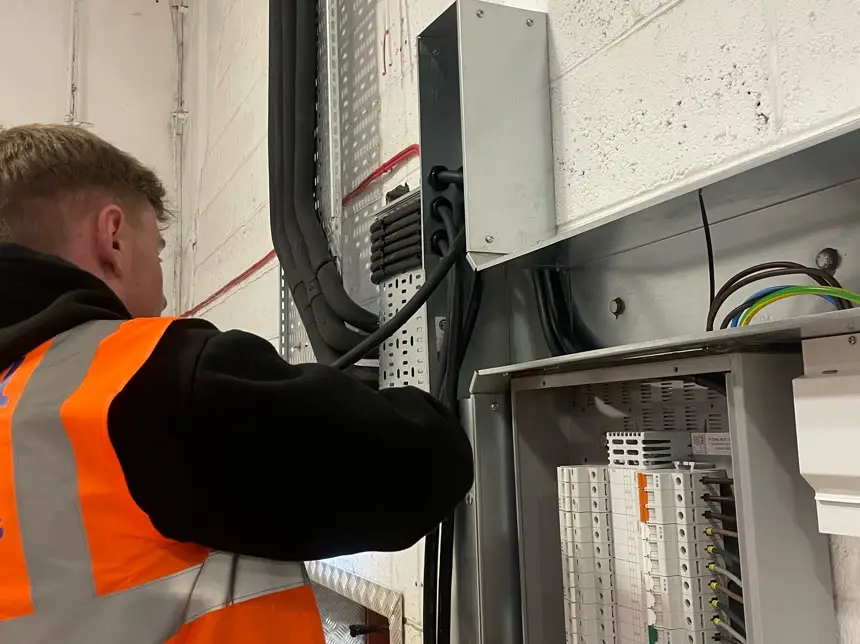
Short answer first. A consumer unit upgrade with us starts from £550, and for most homes in Kent that is the sort of money you should have in mind. The final number depends on the board you need and the state of what we find behind the old one, which is why we always ask for a photo of your current board before we price anything. This article walks through what actually moves the price, so a quote makes sense when you get one.
What a consumer unit actually is
The consumer unit is the fuse box. It is the grey or white box, usually in the hallway, under the stairs or in the garage, where the electricity comes into your home and splits off into circuits. Every circuit has its own protective device in the board, and the board's whole job is to cut the power fast when something goes wrong. An old board with rewirable fuses will still switch things on and off. What it will not do is protect people the way a modern board does.
Why boards get replaced
Three reasons come up over and over.
- No RCD protection. An RCD is the device that trips almost instantly when current leaks to earth, which is what happens when someone touches a live wire or a cable gets damaged. Older boards often have none at all. That alone is reason enough to change one.
- A failed inspection. If you have had an electrical condition report done, perhaps because you are selling, letting or just being sensible, an old board is one of the most common items flagged. Replacing it clears a whole cluster of observations in one job.
- Adding circuits. An EV charger, an electric shower, a garden office. New circuits need somewhere to land, and if the old board is full or not up to the job, the board gets changed as part of the work. EV charger installs come in from £750 to £1,200 with us, and a board change is sometimes part of that conversation.
What moves the price
Two boards can look the same on a quote and be very different jobs. Here is what actually changes the number.
Board size and ways. Boards are sized by ways, which is the number of slots for circuits. A small flat might need eight ways. A four bed house with an EV charger, a hot tub and a loft conversion needs a lot more. Bigger board, more devices, more money. We also like to leave a couple of spare ways so your next project does not mean another board.
RCBOs or shared RCDs. A budget board splits your circuits across two shared RCDs. Cheaper, but when one trips it takes half the house with it, and finding the culprit is a pain. An RCBO board gives every circuit its own combined device, so a fault on the kitchen sockets trips the kitchen sockets and nothing else. RCBO boards cost more per circuit, and on most jobs they are worth it. If your board already trips more than it should, our piece on why a fuse box keeps tripping explains what is usually behind it.
Surge protection. Modern boards can include a surge protective device, which shields your electronics from voltage spikes. Current wiring regulations expect one in most new installs. It adds a bit to the price and it is cheap insurance for a house full of screens and appliances.
What we find when the old board comes off. This is the honest bit most adverts skip. Until the old board is off the wall, nobody knows exactly what is behind it. Sometimes the cables are tidy and labelled. Sometimes there are crumbling rubber cables, borrowed neutrals between circuits, or joints that should never have been made. Small tidying is normal and we allow for it. Anything bigger, we stop, show you photos, and agree a price before touching it.
Bonding to gas and water. Modern rules require the gas and water pipes to be connected to the earthing system with proper bonding cable. Plenty of older houses have none, or have it in the wrong place. If your bonding needs bringing up to standard, that is extra cable and labour, and any decent electrician will insist on it, because a new board on a badly earthed installation is a job half done.
Why the cheapest quote often grows on the day
You will see board changes advertised across Kent at prices that look too good to be true. Often they are, in a specific way. The headline price assumes a small board, shared RCDs, no surge protection, perfect bonding and perfect cables. Almost no real house ticks all of those boxes, so the price grows on the day, when the old board is already off the wall and you are in no position to say no. We would rather ask the awkward questions first and give you a number that survives contact with your hallway.
How we price it
Send us a clear photo of your current board, ideally with the cover open if it opens easily by hand, plus a rough idea of the house and anything you are planning, like an EV charger. That photo usually tells us the size of board, the likely state of the wiring and whether bonding looks present, which means we can normally give you a proper price without a visit. Board changes start from £550. Day rate work is from £80 for the first hour, which includes the call out, then £48 an hour after that, and there is no VAT on domestic work. The full list is on our price guide, and the quote form is the quickest way to get the photo to us.
Certification and paperwork
A consumer unit change is notifiable work, which means building control has to be told and a certificate has to be issued. Certification on notifiable work is handled through a registered contractor we work with, and the paperwork comes to you. You end up with the certificate in your hand, which is what a buyer's solicitor or a landlord's agent will ask to see.
From £550 means exactly that, a starting point. The true price depends on your board and what is behind it, which is why we price from a photo first. And if you ever smell burning from your fuse box, ring 999 first, switch off at the consumer unit if it is safe to reach, then call us.
Tell us the job and get a free quote
Takes a minute. You hear back within 24 hours with a price or a next step. No obligation, and nobody turns up unless you say so.